
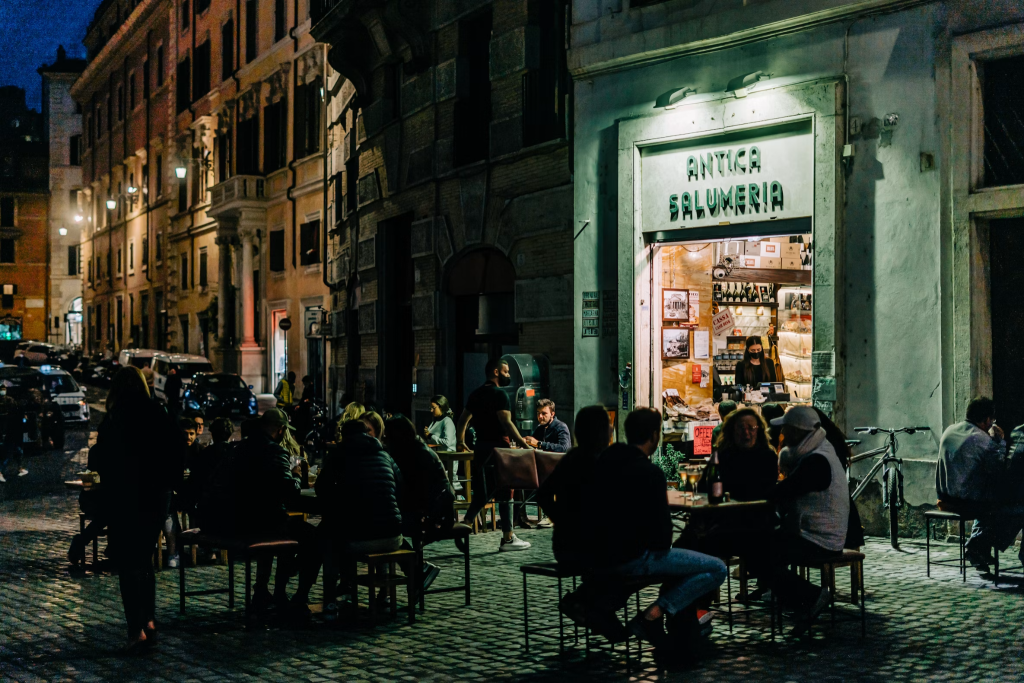
Ask most travelers what Italy does best and the list arrives instantly: espresso taken standing at a bar counter, a three-hour lunch that nobody apologizes for, a piazza that fills up every evening regardless of the season. Life here has always moved on its own clock, one that values pleasure as seriously as productivity. What gets mentioned less often is how naturally that same philosophy extends into leisure and entertainment, including the way Italians approach games of chance and skill.
That connection between everyday enjoyment and structured play isn’t accidental. Platforms such as slimking have grown popular precisely because they mirror something already embedded in the culture – the idea that entertainment should feel unhurried, sociable, and a little theatrical, rather than transactional. Understanding why gaming fits so comfortably into Italian life means looking at the habits, history, and social rituals that shaped it long before any screen was involved.
A Culture Built Around Shared Moments
Italian social life rarely happens in isolation. Meals stretch out because conversation matters as much as food, and a card deck coming out after dinner isn’t a distraction – it’s often the reason everyone stayed at the table so long in the first place. Grandparents teach house rules to grandchildren with a seriousness that would surprise outsiders, and the stakes involved usually matter far less than who gets bragging rights until next Sunday.
Regional Card Traditions
Walk into a bar in Naples and you’ll find Scopa played with a different rulebook than the one used two hours north in Rome. Briscola and Tressette carry similar regional quirks, and locals will happily argue for twenty minutes over which version counts as “real.” That stubbornness is part of the charm.
The Piazza as a Living Room
A public square in an Italian town does double duty as an outdoor living room. Neighbors watch each other play cards or chat over drinks, and there’s little instinct to hide leisure indoors the way some cultures do.
From Physical Halls to Digital Platforms
Online gaming arrived in Italy without erasing what came before it – if anything, operators had to work harder to reproduce habits that already felt second nature offline. Because gambling was already so deeply threaded through daily routines, Italian regulators ended up building one of the more detailed licensing systems in Europe just to keep pace with how much people actually played.
| Era | Typical Setting | Defining Trait |
| Pre-1990s | Local bars and clubs | Informal, community-based |
| 1990s–2000s | Licensed physical venues | Regulated, tax-supported |
| 2010s | Early online platforms | Convenience over ritual |
| Present | Mobile-first sites | Rituals rebuilt digitally |
That last shift matters most. Modern platforms have worked to recreate the sociability of the piazza through live dealers, chat features, and slower-paced table formats that echo an evening of Briscola rather than a rushed transaction.
Why Live Formats Resonate Locally
A live dealer streaming from a studio replicates something specific – the sense of a real person across the table, banter included. Italian users consistently favor these formats over purely automated ones, a preference that tracks directly back to a culture uncomfortable with impersonal exchanges.
Regulation as a Reflection of Values
Italy’s approach to licensing gaming operators isn’t just bureaucratic caution. Advertising limits, shared self-exclusion registers, and mandatory responsible-gaming tools all point back to something Italians already believe at the dinner table – that enjoyment turns sour once it loses its edges, so the edges get built in deliberately.
- Licensing overseen by ADM (Agenzia delle Dogane e dei Monopoli)
- Mandatory self-exclusion registers shared across operators
- Strict controls on advertising timing and content
- Required deposit-limit tools on all licensed platforms
Those same instincts show up at the dinner table, where second helpings are offered generously but gluttony is quietly frowned upon. Moderation, not abstinence, is the cultural default.
The Aesthetic of Play
Presentation matters enormously in Italian life – from how a plate is arranged to how a shop window is dressed. That same attention to craft shows up in gaming interfaces designed for an Italian audience, which tend to favor elegant visual language over flashing, aggressive design cues common elsewhere.
Design Choices That Signal Trust
A restrained color palette or a classical typeface might look like a minor styling choice, but Italian users tend to read it as a signal of seriousness. Flashy, blinking interfaces raise suspicion rather than excitement in a market that equates visual calm with a company worth trusting.
Language and Tone
A brand talking to Italian players tends to sound like it’s setting a table rather than closing a deal, favoring warmth and unhurried phrasing over the clipped urgency that dominates marketing elsewhere. Hospitality wins out over a hard sell almost every time.
Why This Balance Matters Going Forward
Italy’s relationship with gaming works because it never fully separated leisure from ritual. A country that insists on savoring its coffee, its meals, and its Sunday afternoons was never going to treat games of chance as pure mechanism. The platforms that succeed locally understand this instinctively, building experiences that feel less like isolated transactions and more like an extension of a table already set for company.
That cultural throughline – slow enjoyment, social context, visible moderation – explains far more about Italian gaming habits than any regulatory statistic could on its own.